The Counterfeit Problem &  Challenges of Detection

Manufacturers have turned to unconventional supply channels due to supply chain disruptions, significantly increasing counterfeit electronic components. This shift has elevated the risk of receiving subpar or fake components from 0.2-1% to 5-10%.

Conventional laboratory testing falls short when it comes to detecting counterfeit components effectively. Counterfeit parts can exhibit elusive defects that are hard to identify through sampling, and counterfeiters employ sophisticated tactics to deceive testing methods.

The Power of AI

AI emerges as a potent solution in the fight against counterfeit electronic components. It provides a swift and error-free analysis of component authenticity, offering a more efficient and cost-effective alternative to traditional lab testing.

AI systems can utilize data from Surface Mount Technology (SMT) machines, which mount electrical components onto PCBs. By processing this data, AI can spot counterfeit and defective components in real time during the electronic component assembly process. Additionally, AI provides manufacturers with a verifiable record of meticulous component checks, potentially saving them from costly product recalls in case of field failures.

As SMT supply chain challenges persist, manufacturers will continue to source components from diverse markets. AI’s ability to detect the subtlest details in real time offers a practical and efficient means of ensuring chips authenticity.

Conclusion

In the realm of electronic product development, the threat of electronic component counterfeit is significant, particularly during supply chain disruptions. Embracing AI-powered anti-counterfeit technology is crucial in mitigating this risk efficiently. With AI’s assistance, manufacturers can safeguard their reputation, revenue, and public safety.
Related Posts

Sourcing funner

An Earthquake Exposed More Than a Supply Chain Risk. It Exposed a Visibility Problem.

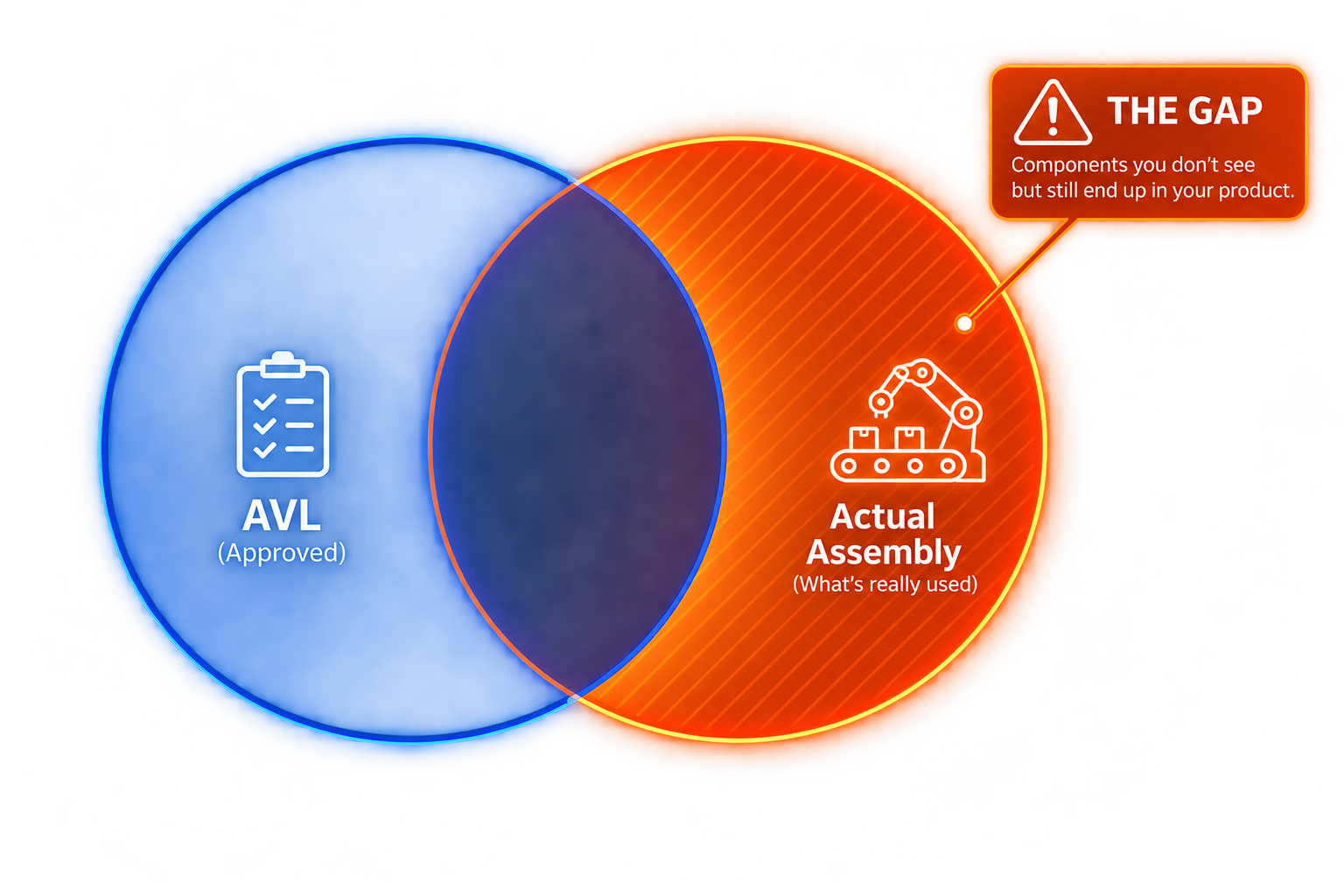
The recent Kumamoto earthquake is a reminder that regional disruptions can quickly ripple through the global electronics supply chain—just as the Fukushima disaster did in 2011. Most OEMs have supplier diversification policies and approved alternative vendors. The real question is whether those alternatives are actually being used in production. In one OEM analysis, the Approved Vendor List (AVL) showed a highly diversified sourcing strategy, yet production data revealed that nearly 30% of components were sourced from a single supplier, creating a hidden concentration risk. Supply chain disruptions don't create hidden dependencies—they expose them. Visual AI enables manufacturers to continuously measure supplier concentration from the products they actually build, turning diversification from a policy into a measurable reality.

Who Verifies the Chip That Verifies Everything Else?

Intel and Fortinet are jointly developing Fortinet's next generation security processor, SP6, in part to build a more resilient, diversified supply chain. A security chip is still a chip. Once SP6 leaves the fab, it has to survive the same assembly process as every other component, the process where substitution and counterfeiting actually happen. Standard checks, documentation, batch traceability, sampling, confirm what should be true. Only Visual AI, verifying every component's markings, lot and date code, and country of origin as it's placed, confirms what is true. Cybord has already flagged over 30 major non-AVL substitution events in the first six months of the year. None were counterfeits. All were wrong parts that reached the line undetected by standard inspection. For telecom and datacom OEMs, the question isn't whether SP6 performs. It's whether you can prove the SP6 on the board is the genuine part, at the silicon level, every time.

The Tectonic Shift in Electronic Supply Chain Assurance

DFARS Case 2022-D011 marks a shift from documentation to proof, requiring defense suppliers to verify hardware provenance rather than rely solely on paper records. The new rule secures where PCBs come from, but not what gets assembled onto them, leaving component-level risks such as counterfeits, substitutions, and unauthorized parts largely unaddressed. Traditional inspection tools verify manufacturing quality—not component authenticity. Visual AI adds evidence by analyzing the physical characteristics of every installed component to confirm it matches approved hardware. As provenance requirements continue to expand, manufacturers that can provide image-based proof of authentic, approved hardware will gain both a compliance and competitive advantage

Accessibility Toolbar