In the fast-paced world of electronics manufacturing, ensuring the quality of electronic components is crucial. Cybord’s has a  electronic component analytics technology. The solution  utilizes visual AI analytics to comply with surface-mount technology  at the Electronics Manufacturing Service. By gathering and analyzing data of every component of each board, Cybord’s technology enhances the performance and efficiency of electronic products. This allows Cybord to provide valuable insights and enable real-time decision-making for its clients.

As a result, Cybord offers three distinct capabilities:

  • Remove or block contaminated reels
    the platform analyzes multiple components and alerts within a minute to promptly recognize when a specific reel needs to be removed from the SMT line.
  • Flag faulty components on boards
    Cybord Identify board issues in near real-time and alert operators through the dashboard to take the board out of the production line.
  • Improve the process by providing feedback to SMT
    The platform detects bad pickups, overexposed and blurry images, and tombstones, helping operators to quickly address the root cause by improving the machine’s setup.

A recent case study involving a Tier-1 Automotive OEM highlights the importance of Cybord’s technology. The OEM encountered a contaminated reel that could have caused painful recall events and damaged products. Cybord’s technology successfully blocked and prevented the contaminated reel from causing further issues.

Next blog 

Related Posts

Who Verifies the Chip That Verifies Everything Else?

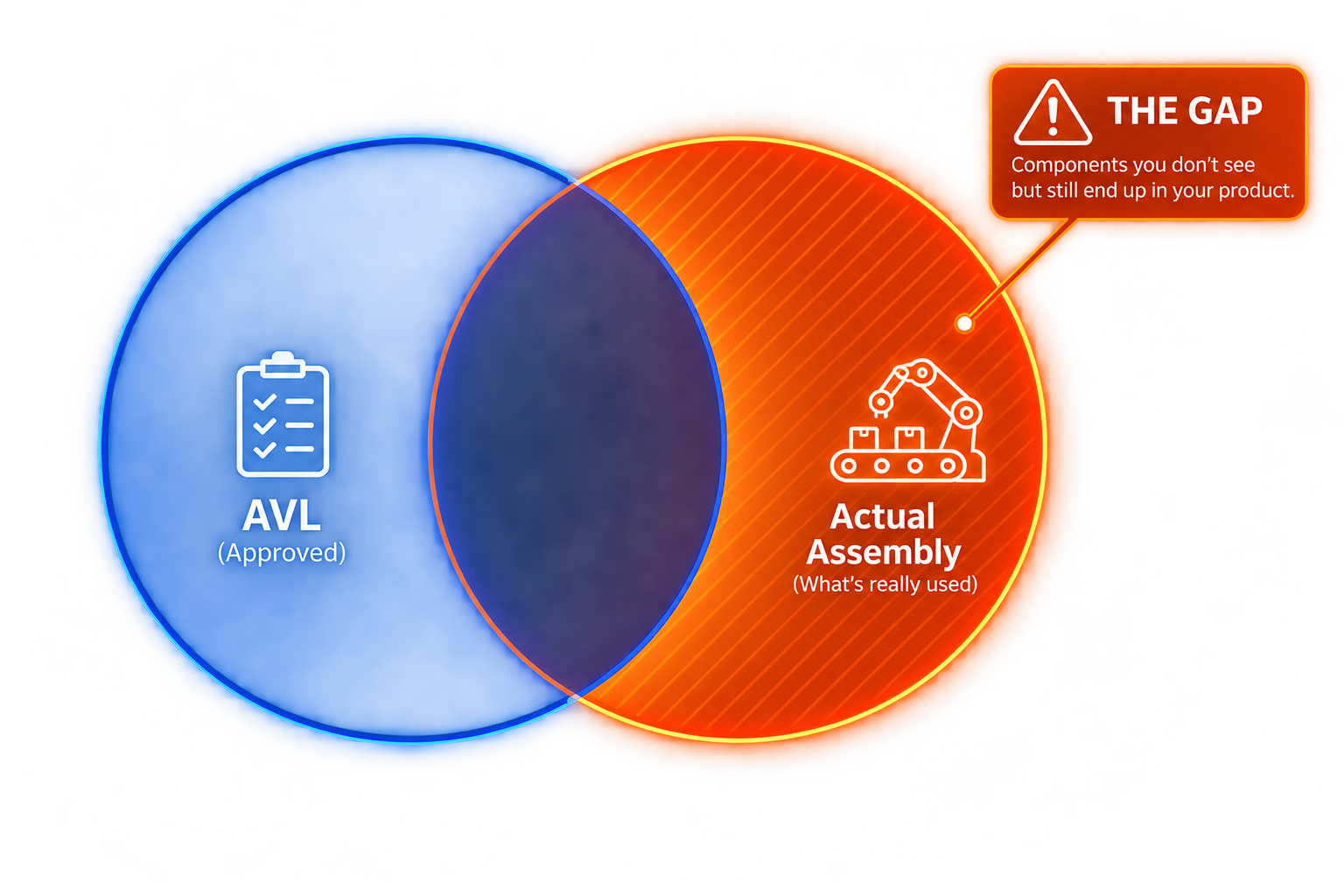
Intel and Fortinet are jointly developing Fortinet's next generation security processor, SP6, in part to build a more resilient, diversified supply chain. A security chip is still a chip. Once SP6 leaves the fab, it has to survive the same assembly process as every other component, the process where substitution and counterfeiting actually happen. Standard checks, documentation, batch traceability, sampling, confirm what should be true. Only Visual AI, verifying every component's markings, lot and date code, and country of origin as it's placed, confirms what is true. Cybord has already flagged over 30 major non-AVL substitution events in the first six months of the year. None were counterfeits. All were wrong parts that reached the line undetected by standard inspection. For telecom and datacom OEMs, the question isn't whether SP6 performs. It's whether you can prove the SP6 on the board is the genuine part, at the silicon level, every time.

The Tectonic Shift in Electronic Supply Chain Assurance

DFARS Case 2022-D011 marks a shift from documentation to proof, requiring defense suppliers to verify hardware provenance rather than rely solely on paper records. The new rule secures where PCBs come from, but not what gets assembled onto them, leaving component-level risks such as counterfeits, substitutions, and unauthorized parts largely unaddressed. Traditional inspection tools verify manufacturing quality—not component authenticity. Visual AI adds evidence by analyzing the physical characteristics of every installed component to confirm it matches approved hardware. As provenance requirements continue to expand, manufacturers that can provide image-based proof of authentic, approved hardware will gain both a compliance and competitive advantage

Accessibility Toolbar