
Innovations Reshaping the Manufacturing Landscape: A Conversation with Cybord’s CEO
Related Posts

The FCC Just Closed the Component Loophole. Can You Prove What’s on Your Boards?
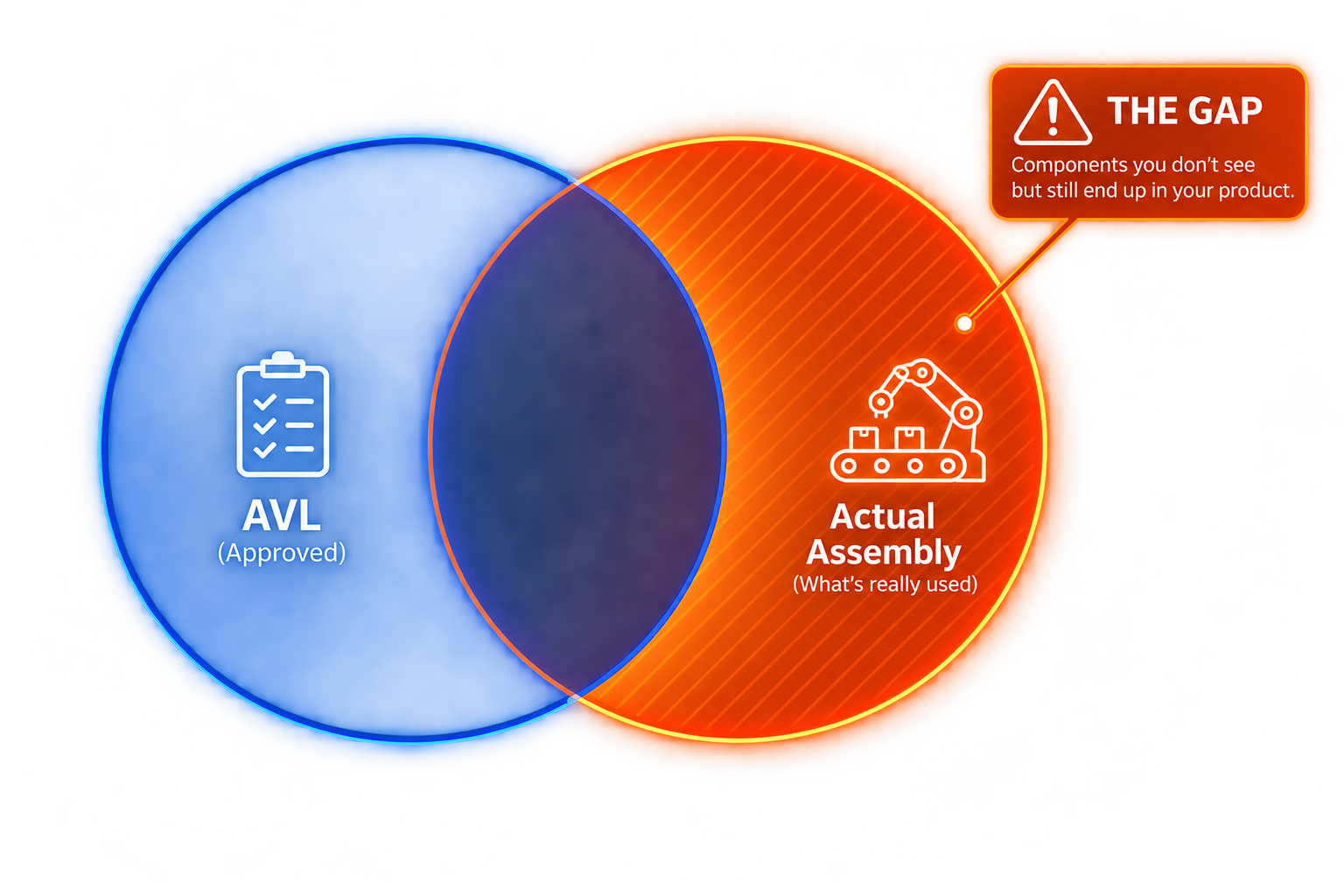
FCC Report and Order 26-50, effective October 13, 2026, closes the “component part loophole” by prohibiting new equipment authorizations for certain radio-frequency devices containing logic-bearing components produced by entities on the FCC’s Covered List, namely China-made chips. The rule shifts regulatory scrutiny beyond the finished device to its internal components, creating a new compliance challenge for OEMs: proving that what is actually manufactured matches their approved sourcing policies.

The Pentagon has until January 1, 2027 to purge these components.
By January 1st 2027 covered U.S. defense systems face new restrictions on PCB/PCBA sourcing from China, Russia, Iran and North Korea. It means an industry that dependend on supplier declarations and certificates will now need to independently verify what was actually assembled on the baord. Cybord's AI-driven software inspects every component at line speed.

The Dangerous Gap Between Declaration and Verification
The electronics industry has spent decades getting better at defining what should go into a product. Now we need to ensure that this is what actually happens. The progression suggested in this paper: Enforce what is approved. Authenticate what was actually built. Predict where supply-chain risk could emerge next.
The Difference Between Supply Chain Data And Supply Chain Intelligence
The electronics supply chain is getting more complicated. And more risky. NVIDIA’s latest results are another reminder of just how much supply has become a