- Home >
- Resources >
- Supply Chain Resilience with Visual AI

Industry
Data Center

Challenge
Supply Chain Resilience

Solution
Cybord Visual AI Platform
Executive Summary
Electronics manufacturers face a growing blind spot: critical component-level deviations that pass traditional inspection but later cause failures, recalls, or security risks.
This case study demonstrates how Cybord’s Visual AI platform identifies:
- Unauthorized component substitutions
- Suspected counterfeit components
- Inconsistencies across production batches
all directly on the production line, using existing equipment.

The Challenge:
Most manufacturers rely on paper-based or ERP-driven BOM/AVL enforcement, AOI (mainly focused on soldering and placement defects) and supplier trust.
These systems have a critical vulnerability – they track what was intended to be on the board, but fail to verify what is actually placed on it.
This creates exposure to:
- Counterfeit components
- Unauthorized vendor substitutions
- Silent quality degradation
- Potential hardware security risks

The Solution: Visual AI
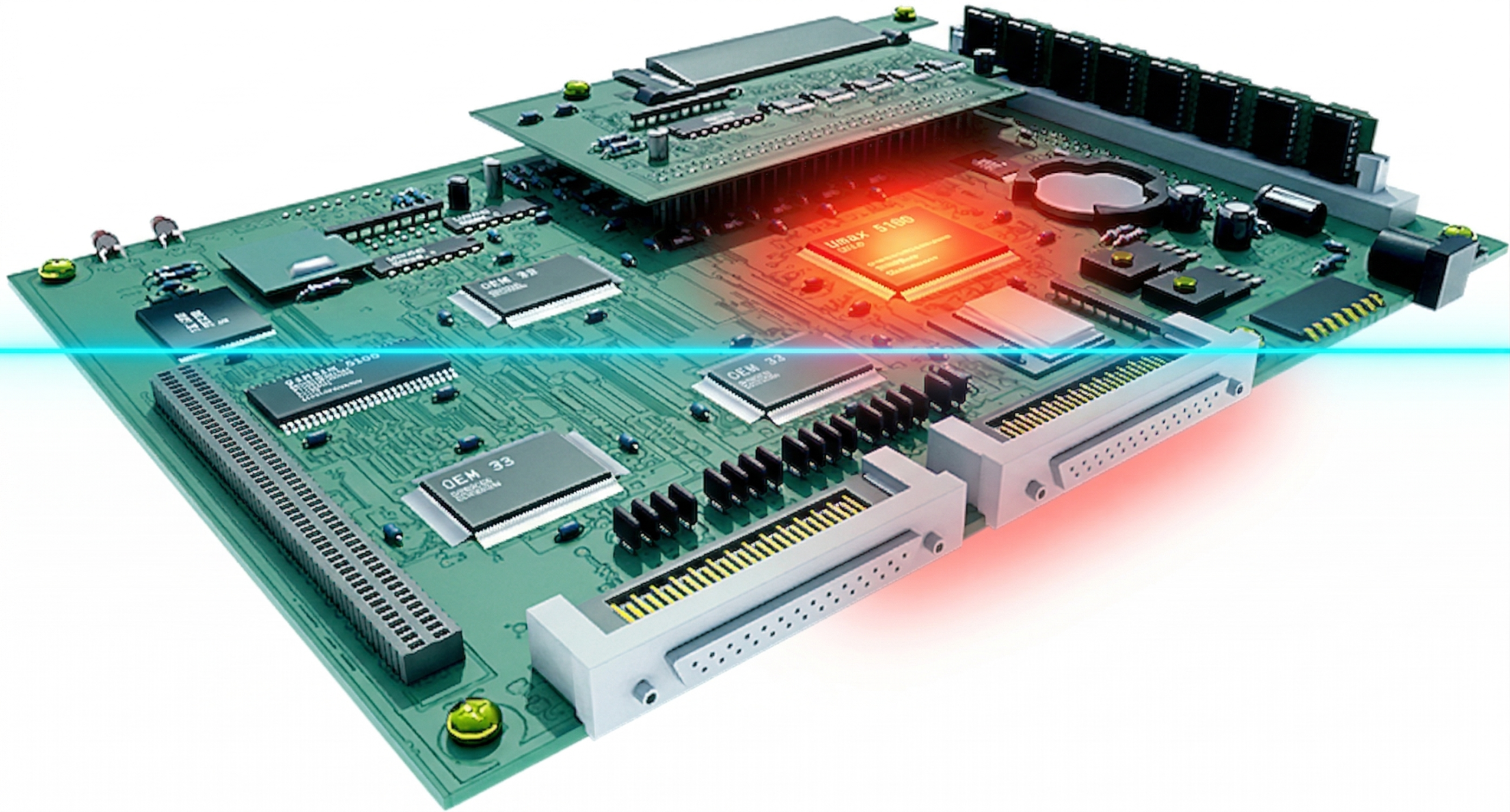
Cybord’s ShieldScan is a software-only Visual AI solution that verifies, in real time, that every PCBA matches its approved BOM, AVL, CAD, and traceability data. It does so by analyzing component-level images from existing production equipment as well as the complete image of the board itself.
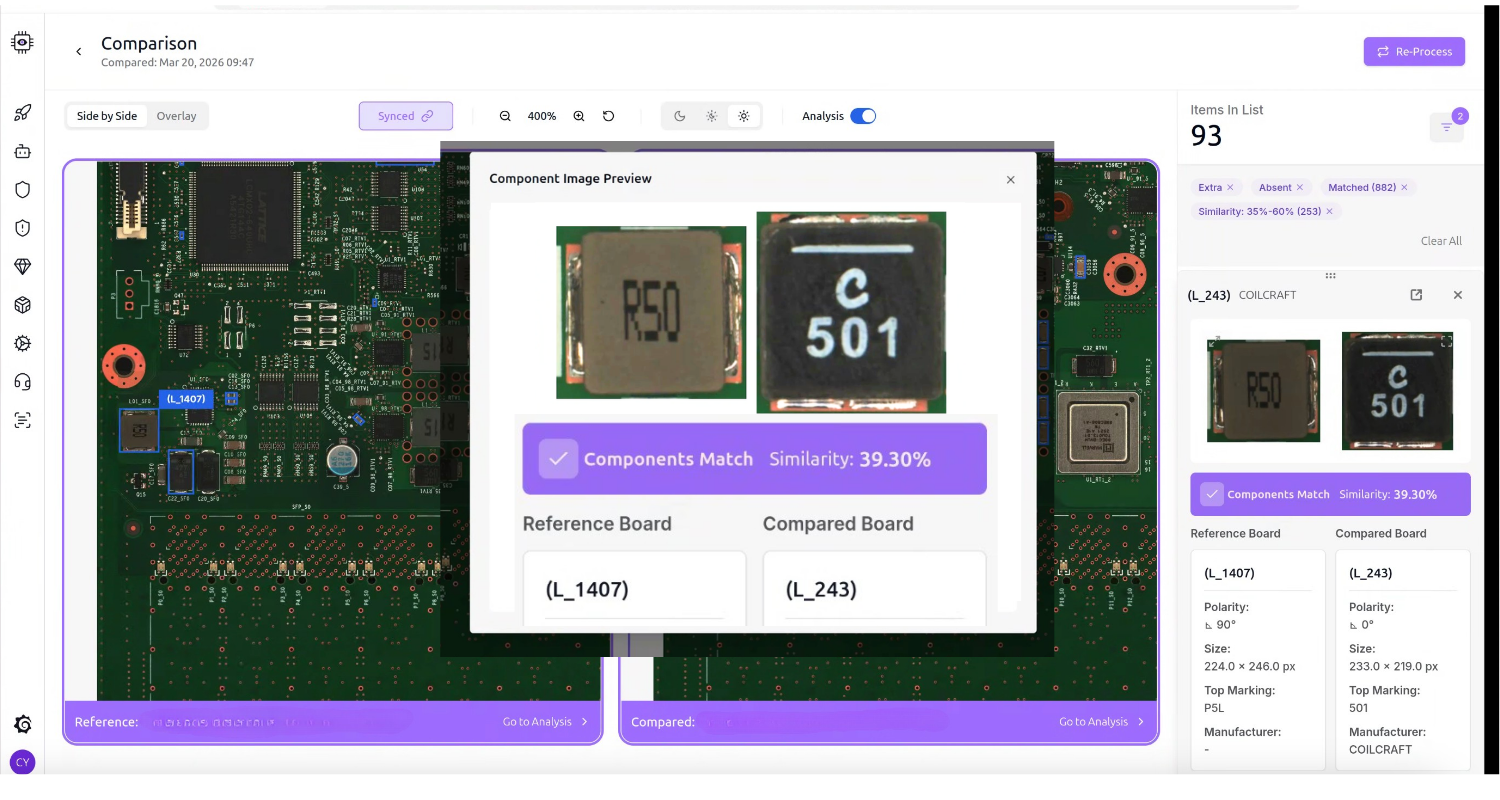
Use Case 1: Unauthorized Component Substitution
Finding:
- Same PCB location populated with components from different manufacturers:
Risk:
- Potential AVL violatation
- Different performance/reliability characteristics
- Potential qualification issues
System Signal:
- Low similarity score (39.3%) → Component Manufacturer
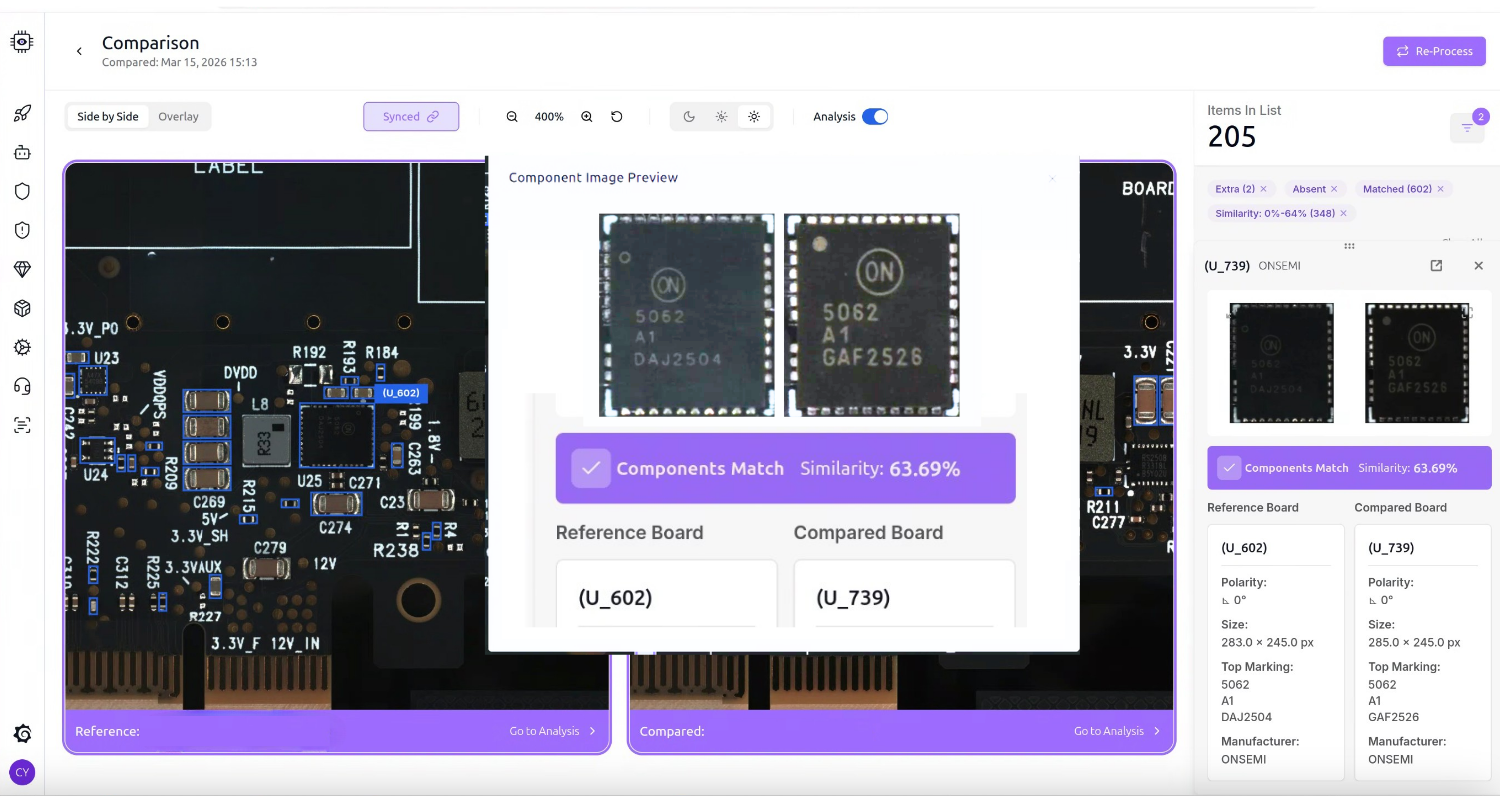
Use Case 2: Authenticity
Finding: Suspicious component:
- Different markings
- Different polarity markings
- Logo inconsistency
Risk:
- Counterfeit or recycled component
- Reliability failure
- Security vulnerability
System Signal
- Under-threshold similarity score (63.7%) → Authenticity Issue
Use Case 3: Systemic Passive Component Variations
Finding:
- Multiple inconsistencies in passive components across boards.
Risk:
- Impact performance
- Indicate supply chain instability
- Potential counterfeit
- Reveal process drift
System Signal:
- Low similarity score (47.5%) → Component Inconsistency

You might also be interested in

Scholarly Articles
Advancements in Electronic Component Assembly: Real-Time AI-Driven Inspection Techniques | Eyal Weiss

AI-Powered Visual Inspection: The Missing Layer in Hardware Cybersecurity and Supply Chain Integrity