
Looking back at the last twelve months, we see a clear narrative arc: what started as geopolitical friction evolved into a full-blown test of supply chain resilience. At Cybord, we spent the year documenting these shifts, not just to report the news, but to highlight a fundamental change in how the industry must operate.
Early 2025: The Tariffs Were Just the Beginning
The year began with a sense of déjà vu. By April, we were discussing how new U.S. tariffs and trade restrictions were accelerating systemic risks. We noted then that the industry was caught in a recurring cycle of disruption – from mineral scarcities to trade barriers – that caught manufacturers off guard every few years. The 25% tariffs on imported electrical components were an early warning that the “globalized” supply chain was fragmenting, creating bottlenecks that counterfeiters were eager to exploit. Much of what we wrote about back then is still relevant and you can read about it here.
Mid-Year: The Intersection of Hardware and Cybersecurity
As spring turned to summer, the conversation shifted toward the “Chip War” and the realization that cybersecurity had a massive blind spot: hardware. In May, we argued that spending billions on software defense is futile if the physical component is compromised.
This was the context for the launch of ShieldScan™, our response to the growing need for data centers to verify 100% of board integrity against tampering and rogue chips. The industry began to realize that bad actors don’t just hack networks; they infiltrate assembly lines. This became even more evident in May when Reuters reported that rogue communication devices were found in Chinese solar power inverters shipped and installed in the USA.
September: The Rise of “Zero Trust Manufacturing”
By September, the consequences of relying on paper trails instead of physical verification became impossible to ignore. We saw high-profile failures, such as Ford’s recall of over 300,000 vehicles due to faulty modules and an Alaska Airlines disruption caused by a data center hardware failure,.
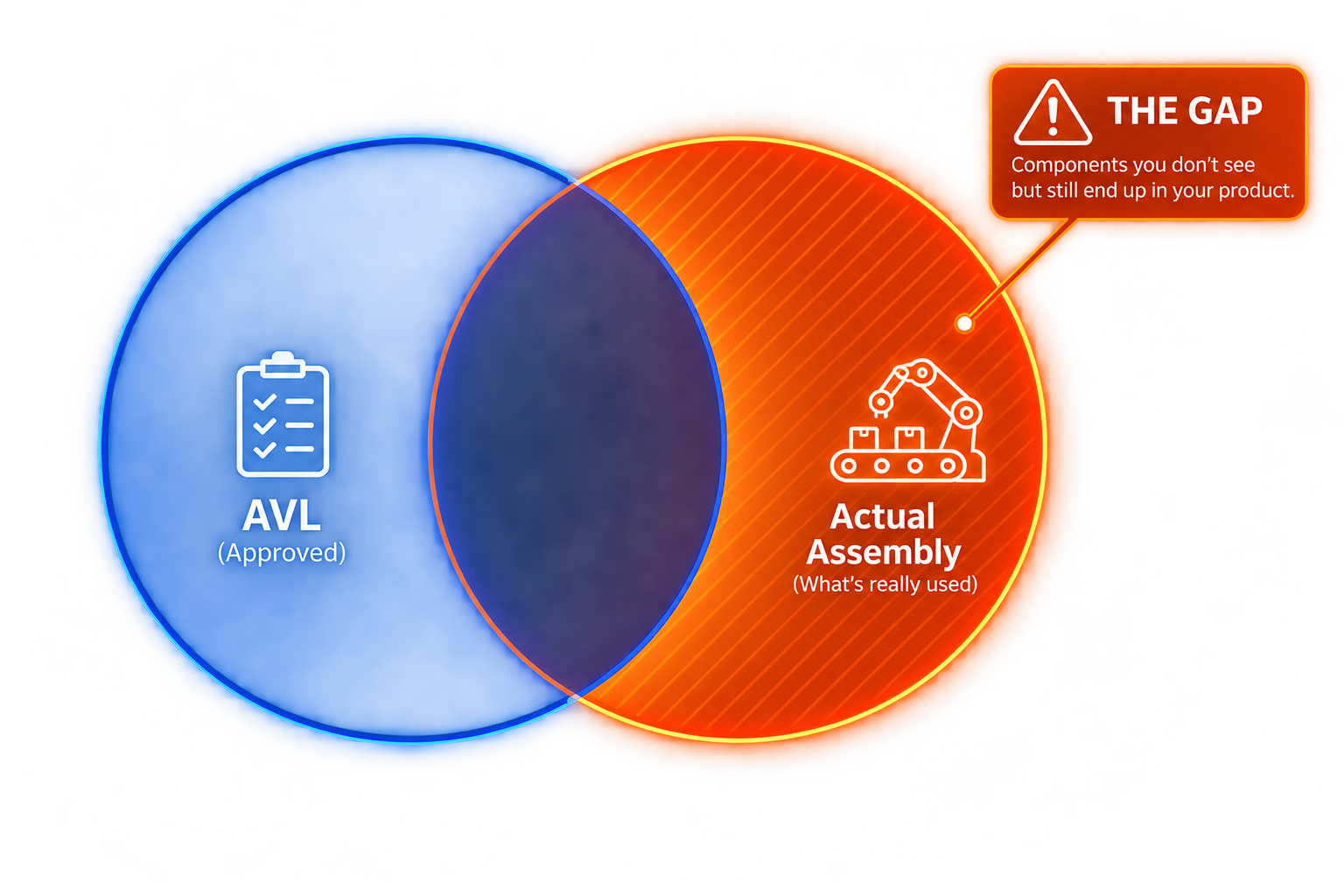
These incidents drove our advocacy for “Zero Trust Manufacturing“. The lesson was harsh but necessary: documentation is not proof. Whether it was “ghost” components in solar inverters or faulty sensors in aviation, 2025 proved that assuming a component is safe without inspecting it is a liability.
October 2025: Building Out Automotive Recalls
In October, we highlighted the staggering pace of automotive recalls – more than 10.8 million vehicles recalled in the U.S. in the first half of 2025, with a more recent report showing another 8.5 million recalls in Q3 alone. We also pointed out that 25% of all recalls stemmed from faulty or mismatched electronic components, more than any other defect category. It’s as if recalls have become a routine, accepted part of modern vehicle manufacturing. But they don’t have to be. In our blog post, we explain how vision-AI systems can catch defects early, ensure only approved components are used, and eliminate recalls by closing quality gaps at the source – rather than reacting after the damage is done.
Late 2025: Supply Chain Cracks Widen
The final quarter of the year brought the theoretical risks into sharp, painful focus. In November, the Nexperia crisis exposed the fragility of the ecosystem, as geopolitical standoffs halted exports and forced automakers like Nissan and Honda to curtail output.
Simultaneously, we saw industry leaders taking drastic measures to protect themselves. Tesla’s mandate to remove Chinese-made components from its U.S. supply chain was a watershed moment. It signaled that major players are no longer accepting “trust me” as an answer – they are demanding micro-traceability to verify Country of Origin (COO) at the individual component level.
Exiting the Year: A New Chip Panic
We closed the year with a warning shot from Micron. Their exit from the consumer-facing business in December triggered a scramble for memory chips. Tech giants quickly placed aggressive, open-ended orders are rapidly draining inventories and driving prices to more than double since February, with further increases expected through 2026. As legitimate supply runs out, desperation grows – opening the door to the most dangerous risk of all: counterfeit components entering the supply chain.
Looking Forward
As we say farewell to 2025, the takeaway is clear. The combination of the Nexperia crisis, Tesla’s strict mandates, and the Micron shortage, along with the ongoing geo-political pressures on the electronics supply chain, has proven that supply chain transparency is now mission-critical. The era of “trust by default” is over; in 2026, the only way to ensure integrity is to move to “trust by inspection,” where nothing is safe until it is physically verified.